
Landmark investment advances U.S. manufacturing leadership, creates high-quality jobs, and positions the Colorado location as a strategic production and export hub
Philip Morris International Inc.’s (PMI) (NYSE: PM) U.S. businesses (PMI U.S.) today celebrated the opening of its Aurora, Colorado manufacturing campus, a landmark investment representing total capital expenditures of $1.2 billion from 2024-2028. The campus expands the company’s domestic manufacturing capabilities, strengthens supply chain resilience, and positions Aurora as a strategic production and export hub supporting future growth. The site began commercial production in July 2026 and produces ZYN nicotine pouches, joining PMI U.S.’s growing modern nicotine manufacturing network, which includes operations in Owensboro, Kentucky, and Wilson, North Carolina.
This press release features multimedia. View the full release here: https://www.businesswire.com/news/home/20260727514086/en/
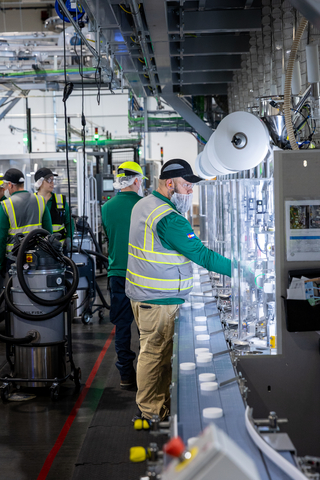
PMI U.S. Opens $1.2 Billion Aurora Campus, Strengthening U.S. Manufacturing and Export Capabilities
Situated on a 148-acre site, the approximately 780,000-square-foot campus is PMI’s first greenfield manufacturing and production complex in the United States. Developed using a design-build delivery approach, the project progressed from shovel to commercial-level shipments in approximately 19 months.
“Aurora represents an important milestone for PMI U.S. and our continued investment in our business here,” said Stacey Kennedy, CEO of PMI U.S. “This facility expands our production capacity, strengthens our supply chain, and enhances our ability to serve growing demand in the United States and around the world. It reflects our confidence in American workers, U.S. manufacturing, and the long-term growth opportunities ahead for our business.”
Originally announced in 2024 as a $600 million project, the Aurora campus continues to advance as part of PMI U.S.'s long-term investment in manufacturing capacity and infrastructure. As the facility enters its next phase of development, PMI U.S. is investing in additional production capacity, site expansion, and future capabilities to support continued growth of ZYN in the United States and increasing opportunities in international markets. The project now represents approximately $1.2 billion total planned investment between 2024 and 2028, including land, advanced manufacturing equipment, infrastructure, facility development, and future production capabilities. Approximately $1 billion of the investment has been incurred to date.
More than a manufacturing facility, Aurora represents a major investment in PMI U.S.’s long-term growth strategy.
Building a Strategic Manufacturing and Export Hub
The Aurora campus integrates production, packaging, warehousing, and distribution operations within a single location, enabling efficient movement of products throughout the United States while supporting future export opportunities.
“Delivering a campus of this scale to commercial production within 19 months required exceptional collaboration, innovation, and commitment from everyone involved,” said Jim O’Leary, Chairman and Chief Executive Officer, The Haskell Company, the design-build partner for the PMI U.S. Aurora campus. “By integrating design, engineering, and construction under a single team, we were able to accelerate delivery while maintaining the highest standards of quality and performance. We are proud to have helped create a facility that will generate lasting economic opportunity for Aurora and strengthen advanced manufacturing in the United States.”
Designed as a fully integrated manufacturing campus, the facility strengthens supply chain resilience, increases operational flexibility, and further diversifies PMI U.S.’s manufacturing footprint. Together with existing operations in Owensboro, Kentucky, and Wilson, North Carolina, Aurora enhances the company’s ability to meet growing demand while reducing reliance on any single production location.
The campus will support international markets across Asia, Latin America and the Caribbean.
Creating Economic Impact in Colorado
The PMI U.S. Aurora campus is expected to directly employ approximately 500 people, creating a range of high-quality career opportunities across engineering, production, technical, quality control, and support functions. Career opportunities can be found at https://join.pmicareers.com/.
At the announcement of the project, construction of the facility was expected to create nearly 5,000 construction-related jobs. An accompanying economic impact study projected that the resulting construction activity would generate nearly $1 billion in economic impact. Once fully operational, the facility is expected to generate approximately $550 million in annual economic impact and support 1,000 indirect jobs.*
Economic investment is only one part of PMI U.S.'s commitment to Colorado. Guided by our principle of “Give where we live,” we complement our business investments with meaningful community partnerships and charitable giving. Since 2024, PMI U.S. has invested more than $1.5 million in Colorado organizations, supporting local partners such as the Rocky Mountain Veterans Advocacy Project, Aurora Water Cares and the Community College of Aurora Foundation as they work to create lasting, positive impact in their communities.
Investing in Future Growth
The opening of the Aurora campus marks an important milestone in PMI U.S.’s continued investment in domestic manufacturing, operational capabilities, and long-term growth, reinforcing the company’s commitment to building the manufacturing capacity, infrastructure, and operational capabilities needed to support growing demand and strengthen its position as a leader in modern nicotine products.
The facility’s opening follows another significant milestone in the United States. On June 30, 2026, the U.S. Food and Drug Administration authorized 20 ZYN products as modified risk tobacco products, making ZYN the first nicotine pouch product authorized to market reduced-risk information compared with cigarettes.
“Our investment in Aurora reflects our belief that American manufacturing will play a critical role in our long-term growth and success,” Kennedy added. "We’re proud to celebrate this milestone alongside our employees, our partners, the Aurora community and the state of Colorado. Together, we’ve built something that will create opportunities, strengthen U.S. manufacturing, and that can support our business for decades to come.”
*Estimates provided from economic impact analysis study conducted by EConsult Solutions, a Philadelphia-based economics consulting firm.
To download pre- and post- media assets, please click here.
###
PMI U.S.: Invested in America
Philip Morris International Inc.'s U.S. businesses are invested in America's future and advancing a smoke-free nation. The businesses are committed to providing the approximately 25 million legal-age consumers who smoke cigarettes with better, smoke-free alternatives and to ensuring the products are marketed responsibly. From PMI's global headquarters in Stamford, Connecticut, and other locations nationwide, PMI U.S. contributes leadership, jobs, investment, and innovation in the U.S. The U.S. businesses employ more than 3,000 people across America and operate product manufacturing facilities, including in Aurora, Colorado, Owensboro, Kentucky, and Wilson, North Carolina. For more information, please visit www.uspmi.com.
References to "PMI" mean the Philip Morris International family of companies. "PMI U.S.," "we," "our," and "us" refer to one or more PMI U.S. businesses.
Philip Morris International: A Global Smoke-Free Champion
Philip Morris International is a leading international consumer goods company, actively delivering a smoke-free future and evolving its portfolio for the long term to include products outside of the tobacco and nicotine sector. The company’s current product portfolio primarily consists of cigarettes and smoke-free products, including heat-not-burn, nicotine pouch and e-vapor products. Our smoke-free products are available for sale in 109 markets as of June 30, 2026. As of December 31, 2025, PMI estimates they were used by over 43 million legal-age consumers around the world, many of whom have moved away from cigarettes or significantly reduced their consumption. The smoke-free business accounted for approximately 42% of PMI’s second-quarter 2026 total net revenues. Since 2008, PMI has invested over $16 billion to develop, scientifically substantiate and commercialize innovative smoke-free products for adults who would otherwise continue to smoke or use other nicotine-containing consumer products, with the goal of completely ending the sale of cigarettes. This includes the building of world-class scientific assessment capabilities, notably in the areas of pre-clinical systems toxicology, clinical and behavioral research, as well as post-market studies. Following a robust science-based review, the U.S. Food and Drug Administration has authorized the marketing of Swedish Match’s General snus and ZYN nicotine pouches and versions of PMI’s IQOS devices and consumables - the first-ever such authorizations in their respective categories. Versions of IQOS devices and consumables, General snus and 20 ZYN nicotine pouch variants also obtained the first-ever Modified Risk Tobacco Product authorizations from the FDA. With a strong foundation and significant expertise in life sciences, PMI has a long-term ambition to expand into wellness areas. References to “PMI”, “we”, “our” and “us” mean Philip Morris International Inc., and its subsidiaries. For more information, please visit www.pmi.com and www.pmiscience.com.
Forward-Looking and Cautionary Statements
This release contains projections of future results and goals and other forward-looking statements, including statements regarding expected financial or operational performance; capital allocation plans; investment strategies; economic impact; business plans and strategies. Achievement of future results is subject to risks, uncertainties and inaccurate assumptions. In the event that risks or uncertainties materialize, or underlying assumptions prove inaccurate, actual results could vary materially from those contained in such forward-looking statements. Pursuant to the “safe harbor” provisions of the Private Securities Litigation Reform Act of 1995, PMI is identifying important factors that, individually or in the aggregate, could cause actual results and outcomes to differ materially from those contained in any forward-looking statements made by PMI.
PMI's business risks include: marketing and regulatory restrictions that could reduce our competitiveness, disrupt our SFP commercialization efforts, eliminate our ability to communicate with adult consumers, or ban certain of our products in certain markets or countries; excise tax increases and discriminatory tax structures; health concerns relating to the use of tobacco and other nicotine-containing products; litigation related to tobacco and/or nicotine products and intellectual property rights; intense competition; inability to anticipate changes in adult consumer preferences; use and reliance on third-parties; the adverse effects of global and individual country economic, regulatory and political developments, natural disasters and conflicts; geopolitical instability; the impact and consequences of Russia's invasion of Ukraine; changes in adult smoker behavior; continued decline of tax-paid cigarettes; lost revenues as a result of counterfeiting, contraband and cross-border purchases; governmental investigations; unfavorable currency exchange rates and currency devaluations, sustained periods of elevated inflation, and limitations on the ability to repatriate funds; adverse changes in applicable corporate tax laws; disruptions in the credit markets or changes to its credit ratings; recent and potential future tariffs imposed by the U.S. and other countries; adverse changes in the cost, availability, and quality of tobacco and other agricultural products and raw materials, as well as product components for its electronic devices; and the integrity of its information systems and effectiveness of its data privacy policies. PMI's future profitability may also be adversely affected should it be unsuccessful, in key markets or systemically, in its efforts to introduce, commercialize, and grow smoke-free products or if regulation or taxation do not differentiate between such products and cigarettes; if it is unable to successfully introduce new products, and promote brand equity; if there are prolonged disruptions of facilities used to produce its products; if it is unable to enter new markets or improve its margins through increased prices and productivity gains; if other market participants are more successful in their SFP commercialization efforts; if it is unable to attract and retain the best global talent; or if it is unable to successfully integrate and realize the expected benefits from recent transactions and acquisitions. Future results are also subject to the lower predictability of our smoke-free products performance.
PMI is further subject to other risks detailed from time to time in its publicly filed documents, including PMI's Annual Report on Form 10-K for the fourth quarter and year ended December 31, 2025, and the Quarterly Report on Form 10-Q for the second quarter ended June 30, 2026. PMI cautions that the foregoing list of important factors is not a complete discussion of all potential risks and uncertainties. PMI does not undertake to update any forward-looking statement that it may make from time to time, except in the normal course of its public disclosure obligations.
View source version on businesswire.com: https://www.businesswire.com/news/home/20260727514086/en/
Contacts
Philip Morris International
Corey Henry
T. +1 (202) 679 7296
E. corey.henry@pmi.com
If you believe this article contains misleading, harmful, or spam content, please let us know.
Report this article